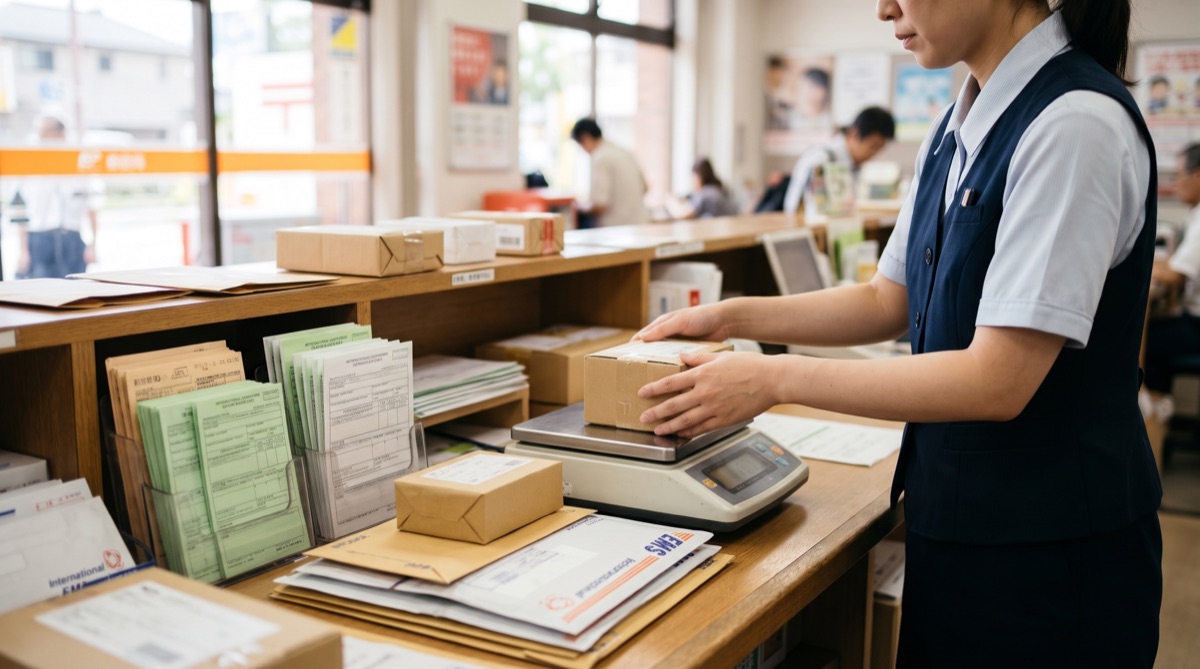
Parcels straight from Japan avoid EU stock, not EU rules.
Last updated 19 November 2026 · Sources linked in the text

| Item | Parcels up to €150 | Parcels over €150 |
|---|---|---|
| VAT | At checkout through IOSS, or at import without it | At import |
| Customs duty | €3 per tariff line, 1 July 2026 to 1 July 2028; the EPA rate instead only in a full (H1) declaration without IOSS | Normal duty, zero or reduced under the EPA with a statement on origin |
| Union handling fee | €2 per tariff line from 1 November 2026 | €2 per tariff line on sales to consumers |
| Carrier's clearance charge | Set by the carrier, not by the EU | Set by the carrier or broker |
| Alcohol and tobacco | Not allowed through IOSS; excise at import | Excise at import |
Sources (5)European CommissionEuropean Commission: VAT for e-commerce
European CommissionEuropean Commission: customs guidance on the EUR 3 customs duty and the Union handling fee (2026)
European CommissionEuropean Commission: EU customs reform, the €2 Union handling fee from 1 November 2026
EUR-LexCouncil Directive (EU) 2020/262 on excise duty, Article 44 (distance selling)
European CommissionEuropean Commission: a €3 customs duty on low-value parcels (29 June 2026)
A seller established outside the EU needs an EU intermediary to use IOSS (Norway is the only exception). One registration covers every EU country, with one monthly return. The Council agreed on 9 November 2026 to remove the €150 limit; until the change applies, it stays. Sources (2)European CommissionEuropean Commission: guide to the VAT One Stop Shop (July 2026)
European CommissionEuropean Commission: Council agreement on removing the €150 IOSS threshold (9 November 2026)
From 1 July 2026 to 1 July 2028, goods in a consignment worth up to €150 sold to EU consumers pay a customs duty of €3 per item, and an item is a tariff line on the customs declaration, not a unit. Three tins of the same matcha are one line and pay €3; a tin of matcha, a ceramic cup and a whisk are three lines and pay €9. After 1 July 2028 normal duty rates apply.
| Rule | Detail |
|---|---|
| Union handling fee | €2 per tariff line from 1 November 2026, on every sale to an EU consumer, including parcels over €150; it is permanent and VAT is charged on it |
| EPA preference instead of €3 | Only in a full H1 declaration with a preference code, and only when the VAT was not collected through IOSS. Every IOSS parcel pays the €3 duty |
| Who pays | The declarant: the IOSS seller or the carrier or broker acting for the seller or buyer, who usually passes it on |
Sources (2)European CommissionEuropean Commission: customs guidance on the EUR 3 customs duty and the Union handling fee (2026)
European CommissionEuropean Commission: EU customs reform, the €2 Union handling fee from 1 November 2026
Illustration: two identical Japanese-made ceramic cups at €45 each (one tariff line), €10 shipping charged, French VAT 20%, delivered after 1 November 2026.
| Line | IOSS, low-value declaration | No IOSS, low-value declaration | No IOSS, H1 with EPA origin |
|---|---|---|---|
| Goods and shipping | €100.00 | €100.00 | €100.00 |
| Customs duty | €3.00 | €3.00 | EPA preferential rate (check TARIC for the code) |
| Union handling fee | €2.00 | €2.00 | €2.00 |
| VAT | €20.00, charged at checkout | €21.00 at import (20% of €105) | €20.40 at import if the EPA rate is zero (20% of €102) |
| Carrier's clearance charge | Usually none | The carrier's own fee | The carrier's or broker's fee, usually higher for an H1 |
| Buyer pays at the door | Nothing | VAT, duty, fee and carrier charge, unless the seller ships delivered duty paid | Same |
With IOSS the seller pays the €3 and the €2 through its customs broker and either absorbs them or builds them into the price. The H1 route needs the statement on origin on the invoice and pays off mainly when the normal duty on the goods is high. European Commission
For parcels over €150, and for low-value parcels declared in H1 without IOSS, the EPA removes or reduces duty when the goods are Japanese originating and the exporter writes a statement on origin on the invoice or another commercial document. Sources (2)European CommissionEuropean Commission, Access2Markets: EU-Japan Economic Partnership Agreement
European CommissionEuropean Commission: customs guidance on the EUR 3 customs duty and the Union handling fee (2026)
Even without EU stock, a seller shipping to consumers needs a packaging EPR registration in each country, a representative where that country requires one, and an EU operator for product safety. We register and represent in Germany (€149 a year), France (from €190 per stream) and Spain (from €199). EUR-Lex
Related: Sell in the EU without an EU company
| Route | Who imports | Documents you supply | Suits |
|---|---|---|---|
| Japan Post or courier, parcel by parcel | Each parcel, for the buyer | Commercial invoice, IOSS number; statement on origin over €150 or for an H1 claim | Testing demand, small volumes |
| Your stock at an EU logistics provider | You, as importer of record | Invoice, statement on origin, EORI, packing list | Steady sales, faster delivery |
| Marketplace fulfilment, for example Amazon FBA | You | As above, plus the marketplace's EPR numbers per country | Marketplace-led sales |
| An EU distributor | The distributor | Invoice, statement on origin, product documentation | Retail and B2B |

Razvan Toma is the founder of EPR EU Rep, the group behind EPR France Rep, EPR Germany Rep and EPR Spain Rep, authorised representatives for producers with no establishment in those countries. He has worked in waste management and recycling since 2009, running circular economy programmes inside large B2B organisations in France for clients including Chanel, Microsoft, Decathlon, Pirelli, IKEA, Vinci, Capgemini and E.Leclerc.

Connect on LinkedIn →
From JapanSelling in the EU from JapanJapanese sellers entering the EU: the EU-Japan Economic Partnership Agreement, VAT on parcels, cosmetics rules, and packaging EPR in France, Germany and Spain.Read →
From JapanSelling Japanese cosmetics in the EU: the compliance checklistJapanese skincare and make-up in the EU: the Responsible Person, the safety assessment, the product file, the CPNP notification, EU labels, packaging EPR and the EU-Japan EPA.Read →
From JapanSelling Japanese food and drink in the EU: numbers and rulesJapan's agri-food exports to the EU rose 26.4% to ¥57.3bn in H1 2026. Who is responsible in the EU, the label changes, additives, residues, animal products, the EPA and packaging EPR.Read →
From JapanMatcha and green tea in the EU: residues, organic, labels and dutyGreen tea exports up 83.5% in H1 2026. EU pesticide residue limits, the organic JAS equivalence and its end date, labels, zero duty under the EPA and packaging EPR for a tin.Read →
From JapanSake and Japanese whisky in the EU: excise, distance selling and labelsExcise duty in each EU country, the distance-selling rule (register before dispatch), why IOSS doesn't cover alcohol, labels for sake and whisky, and zero duty under the EPA.Read →
From JapanJapanese knives and tableware in the EU: food contact rulesFood contact rules for kitchen knives, ceramics, plastics and lacquerware, the tighter Dutch and Luxembourg ceramics limits from May 2026, GPSR and packaging EPR.Read →We act as your representative in France, Germany and Spain: registration, numbers and yearly declarations.