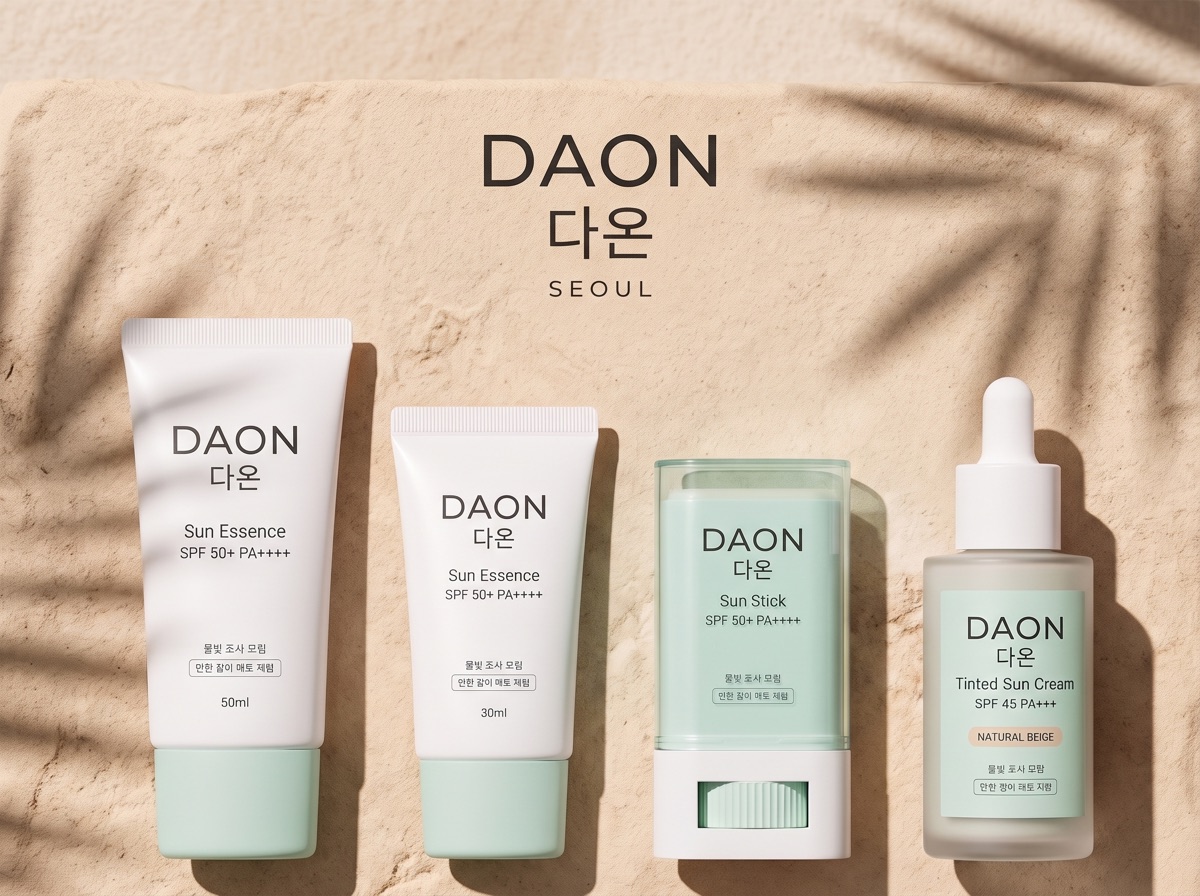
A parcel from Seoul to Paris or Berlin meets three sets of rules: VAT and customs at the border, the free trade agreement if you claim it, and packaging EPR in the country where it is delivered.
Last updated 19 November 2026 · Sources linked in the text

VAT is due on every parcel, at the rate of the delivery country. Who collects it depends on how you sell:
| How you sell | Who collects the VAT | What the buyer sees |
|---|---|---|
| Through a marketplace (Amazon, Joom) | The marketplace, as deemed supplier | VAT included in the price |
| Own shop, registered for IOSS | You, at checkout, through an EU intermediary | VAT included; nothing to pay at the door |
| Own shop, without IOSS | The carrier, at delivery | VAT, duty and the carrier's clearance charge at the door |
A Korean seller needs an intermediary established in the EU to use IOSS: only sellers from a country with a VAT mutual-assistance agreement with the EU (currently Norway) can skip it. On 9 November 2026 the Council agreed to remove the €150 ceiling of IOSS; check the date it applies before you plan around it.
| Country | Standard VAT rate |
|---|---|
| France | 20% |
| Germany | 19% |
| Spain | 21% |
Sources (5)European CommissionEuropean Commission: VAT for e-commerce
European CommissionEuropean Commission: guide to the VAT One Stop Shop (July 2026)
European CommissionEuropean Commission: Council agreement on removing the €150 IOSS threshold (9 November 2026)Your EuropeYour Europe: VAT rates in EU countries
European CommissionEuropean Commission: a €3 customs duty on low-value parcels (29 June 2026)
Parcels worth €150 or less used to enter duty-free. Since 1 July 2026 goods sold to consumers in them pay €3 per item, where an item is a tariff line on the declaration, until 1 July 2028, when normal duty rates take over. From 1 November 2026 customs also charge a €2 Union handling fee per tariff line on every distance sale, at any value; VAT is charged on it.
| Parcel contents | Tariff lines | Duty | Handling fee |
|---|---|---|---|
| Three bottles of the same serum | 1 | €3 | €2 |
| A serum and a cream (same tariff code) | 1 | €3 | €2 |
| A serum, a cleansing device and a cotton pouch | 3 | €9 | €6 |
Korean-origin goods can avoid the €3 with the FTA rate only in a full H1 declaration and only when the VAT was not collected through IOSS; the handling fee applies either way. The €150 test uses the value of the goods, not the shipping charge. Product identifiers become mandatory in customs declarations from 1 November 2026. Sources (2)European CommissionEuropean Commission: customs guidance on the EUR 3 customs duty and the Union handling fee (2026)
European CommissionEuropean Commission: EU customs reform, the €2 Union handling fee from 1 November 2026
These go through normal import: customs duty at the rate for the product and import VAT, paid by whoever imports the goods. Goods of Korean origin can enter at the preferential rate of the EU-Korea agreement with an origin declaration on the invoice; above €6,000 per consignment, only an approved exporter authorised by Korea Customs Service can make it. European Commission
Illustration, own shop with IOSS, one parcel to France. Assumptions: one 30 ml serum sold at €40, shipping charged €6, French VAT 20%, delivered after 1 November 2026, the €3 duty and €2 handling fee paid by the seller's customs broker.
| Line | Amount | Paid by |
|---|---|---|
| Product price | €40.00 | Buyer |
| Shipping charged | €6.00 | Buyer |
| French VAT, 20% of €46 | €9.20 | Collected at checkout, paid through IOSS |
| Customs duty, one tariff line | €3.00 | Seller (or passed on in the price) |
| Union handling fee, one tariff line | €2.00 | Seller (or passed on in the price) |
| Packaging EPR in France | Covered by the yearly registration and scheme fee | Seller |
| Buyer pays in total | €55.20 | Nothing more at the door |
Without IOSS, VAT is charged at import on the goods, shipping, duty and handling fee: 20% of €51 is €10.20. The buyer then pays €15.20 to the carrier on delivery (€10.20 VAT, €3 duty, €2 handling fee) plus the carrier's own clearance charge, unless the seller ships delivered duty paid. Charges at the door are the most common reason for refused parcels. Sources (2)Your EuropeYour Europe: VAT rates in EU countriesEuropean CommissionEuropean Commission: customs guidance on the EUR 3 customs duty and the Union handling fee (2026)
| Parcels from Korea | EU warehouse or 3PL | Wholesale to a distributor | |
|---|---|---|---|
| Duty and fees | €3 per tariff line plus the €2 handling fee | Normal duty on bulk; FTA preference | Paid by the distributor |
| VAT | IOSS or marketplace | Registration where the stock sits, OSS for other EU buyers | Distributor's own |
| Delivery time | Days to weeks | 1 to 3 days | Distributor's |
| Packaging EPR | You, per delivery country | You, per country sold into | The distributor |
| When it fits | Under a few hundred orders a month | Steady volume, Amazon FBA | Retail distribution |
The shipping box, the filling and the product's own packaging count as packaging placed on the market in the delivery country.
| Delivery country | Registration and number | Our fee per year |
|---|---|---|
| France | SYDEREP and an eco-organisme; one IDU per stream | from €190 |
| Germany | LUCID and a dual-system licence | €149 |
| Spain | RPP and a SCRAP; ENV number | from €199 |
For a worked example with weights and scheme rates, see packaging EPR for one serum in France, Germany and Spain. EUR-Lex

Razvan Toma is the founder of EPR EU Rep, the group behind EPR France Rep, EPR Germany Rep and EPR Spain Rep, authorised representatives for producers with no establishment in those countries. He has worked in waste management and recycling since 2009, running circular economy programmes inside large B2B organisations in France for clients including Chanel, Microsoft, Decathlon, Pirelli, IKEA, Vinci, Capgemini and E.Leclerc.

Connect on LinkedIn →
From KoreaSelling on Joom from Korea: the EU registrations you needWhat Joom and every EU marketplace must collect from a Korean seller (DSA Article 30, PPWR Article 45(4)), the EPR number formats for Germany, France, Spain and Italy, VAT on Joom parcels, product safety, and an example submission.Read →
From KoreaSelling Korean cosmetics in the EU: the complete guide for K-beauty brandsK-beauty in Europe in numbers, the markets that buy it, and every step before the first EU sale: Responsible Person, ingredient limits, safety report, CPNP, EU labels, claims and packaging EPR, with the regulation behind each.Read →
From KoreaHow K-beauty brands sell in Europe: four routes, real examples and who registers whatRetail chains, marketplaces, specialist shops and your own store: how Korean beauty brands reach European buyers, what Amorepacific, Sephora and L'Oréal did, and who is the Responsible Person and EPR producer on each route.Read →
From KoreaSelling Korean sunscreen in the EU: UV filters, SPF labels and the claims to dropKorean sun creams in the EU: only Annex VI UV filters, the EU's SPF categories and UVA rule, what replaces PA+++ on the label, the claims you can't make, and the filters restricted since 2022.Read →
From KoreaK-beauty ingredients and the EU limits: retinol, arbutin, kojic acid, UV filters and fragranceThe EU limits that hit Korean formulas most, with the exact concentration and date from each regulation: vitamin A, alpha-arbutin, arbutin, kojic acid, 4-MBC, benzophenone-3, octocrylene, TPO and the new fragrance allergen labelling.Read →
From KoreaRelabelling Korean cosmetics for the EU: what changes on the packEach item the EU label needs and what a Korean pack usually misses: the Responsible Person, durability or PAO, the INCI list and allergens, languages, and claims under Regulation 655/2013.Read →We act as your representative in France, Germany and Spain: registration, numbers and yearly declarations.